
Best Value iPhone in 2026: An Honest Melbourne Breakdown
Which iPhone gives Melbourne buyers the most for their money in 2026? We break down every model in Apple's current lineup and name the winner on value.
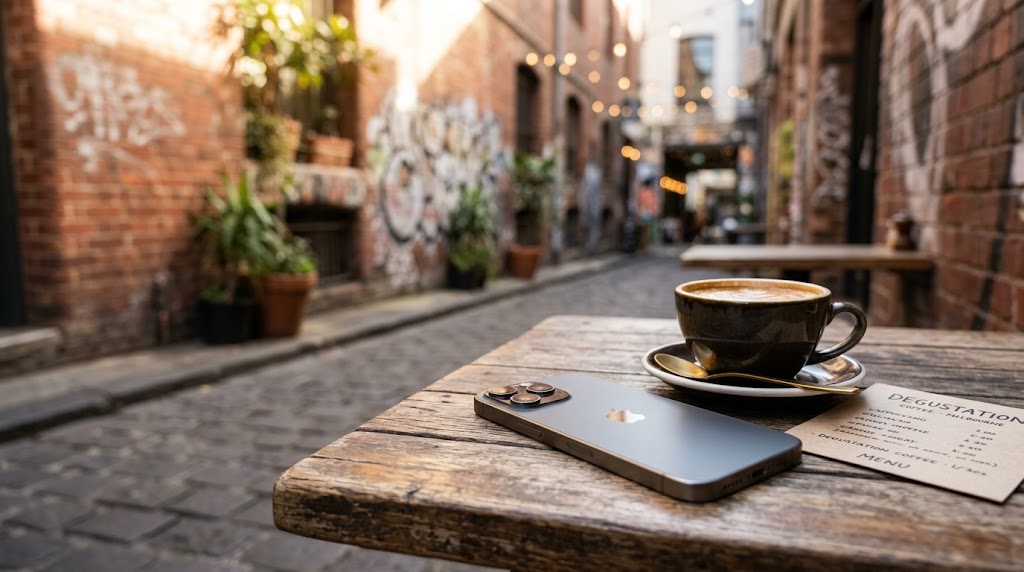
You walk into the Apple Store on Bourke Street, or you scroll the Apple AU site at 11pm, and you're staring at six different iPhones ranging from $999 to $2,199. They all look reasonable. They all promise Apple Intelligence, all-day battery, and "the best iPhone we've ever made." So which one is actually the smartest buy in 2026?
We sort through used and current iPhones every single day here in Melbourne, so we have a pretty unsentimental view of what a phone is really worth. Here's our honest breakdown of every model in the May 2026 lineup, and the one we'd pick if we were spending our own money.
The short answer
The iPhone 17 at $1,399 is the best value iPhone you can buy new in Australia right now. It gets you the new A19 chip, a proper 120Hz ProMotion display, dual 48MP cameras, 256GB of storage as standard, and the longest battery life of any iPhone in the lineup — for $600 less than the Pro. Unless you have a specific reason to spend more (real photography work, or a real budget squeeze), it's the sweet spot.
If $1,399 is more than you want to spend, the iPhone 16e at $999 is the floor — solid, but with some real compromises. Read on for the full picture.
The 2026 iPhone lineup at a glance
| Model | Starting price (AU) | Chip | Display | Cameras | Storage |
|---|---|---|---|---|---|
| iPhone 16e | $999 | A18 | 6.1″ OLED, 60Hz | 1× 48MP | 128GB |
| iPhone 17e | $999 | A19 | 6.1″ OLED, 60Hz | 1× 48MP | 256GB |
| iPhone 17 | $1,399 | A19 | 6.3″ OLED, 120Hz ProMotion | 2× 48MP | 256GB |
| iPhone Air | $1,799 | A19 Pro | 6.5″ OLED, 120Hz | 1× 48MP | 256GB |
| iPhone 17 Pro | $1,999 | A19 Pro | 6.3″ OLED, 120Hz | 3× 48MP (incl. telephoto) | 256GB |
| iPhone 17 Pro Max | $2,199 | A19 Pro | 6.9″ OLED, 120Hz | 3× 48MP | 256GB |
Prices are Apple AU's official RRP as of May 2026. JB Hi-Fi, Amazon, and The Good Guys regularly knock 10–20% off the 16e and last year's iPhone 16 if you're patient.
Why the iPhone 17 wins on value
A few years ago the "base" iPhone was the one Apple obviously wanted you to skip. They'd nerf the refresh rate, give you yesterday's chip, and quietly nudge you toward the Pro. That's no longer the case. The iPhone 17 is a genuinely great phone, and Apple has stopped holding it back.
Here's what the $1,399 gets you:
- A19 chip. Same generation Apple is using across the lineup. It's fast enough that most people will never notice a difference between this and the A19 Pro in the Pro Max.
- 120Hz ProMotion OLED. This used to be a Pro-only feature, and it's the single biggest day-to-day quality-of-life upgrade. Scrolling, gaming, animations — everything just feels smoother. Once you've used a 120Hz iPhone you can't unsee the stutter on a 60Hz one.
- 48MP dual fusion camera. Main + ultra-wide, with 2× optical-quality telephoto cropped from the main sensor. For 95% of people taking photos at brunch, at the footy, or of their kids, the difference between this and the Pro's dedicated telephoto is invisible.
- 256GB starting storage. Double last year's base. Apple finally killed off the 128GB cripple-spec on the regular iPhone, which means you don't need to budget another $150 to make the phone usable.
- All-day-plus battery. Apple quotes up to 30 hours of video playback — the longest in any iPhone, beating the Air and matching the Pro.
- Ceramic Shield 2 front glass. More scratch resistant than the Pro Max from two years ago.
The math on longevity. Apple now ships 7+ years of iOS updates on every new model. Spread $1,399 across seven years and you're paying about $200 per year, or roughly $4 per week. The iPhone 17 will still be a perfectly current phone in 2030.
When the iPhone 16e is the right pick
The iPhone 16e exists for one reason: $999 is a psychological cliff. If you can't or don't want to spend over a grand, it's the only new iPhone for you.
It's not a bad phone. The A18 chip is more than fast enough, Face ID works, USB-C is in, and you still get Apple Intelligence support. But the compromises are real:
- 60Hz display. No ProMotion. After a few weeks you stop noticing, but it's the first thing reviewers point out and the first thing your mate with an iPhone 17 will rib you for.
- One rear camera. No ultra-wide. You can still take great photos in good light, but landscapes and group shots are tighter than you'd like.
- 128GB base. Workable, but if you take a lot of video you'll fill it. The 256GB version is $1,149 — at which point you're $250 from a vastly better phone.
- No MagSafe on the original 16e. (The newer 17e fixes this — see below.)
Buy the 16e if you're on a hard budget, you primarily use your phone for messages, maps, and calls, and you keep your phones until they physically die.
Where the iPhone 17e fits
The 17e launched in March 2026 and confused a lot of buyers because it sits at the exact same $999 price point as the older 16e. So which "e" should you buy?
The 17e wins on paper:
- A19 chip (vs A18 in the 16e) — same chip as the iPhone 17 itself
- 256GB starting storage (vs 128GB)
- MagSafe support
- IP68 water resistance to 6 metres
- Up to 26 hours of video playback
It's still got the 60Hz display and the single camera, but for the same money as the 16e you get meaningfully better internals. If you're choosing between the two new "e" models, the 17e is the obvious pick. The only reason to grab a 16e is if a retailer has discounted it well below $999 — Amazon and JB Hi-Fi have both dipped under $800 at times.
iPhone Air: gorgeous, but a luxury
The iPhone Air is the new ultra-thin model — 5.64mm thick, titanium frame, 41 grams lighter than the Pro despite a bigger screen. In the hand it's a genuinely remarkable object, and we get why people are buying them.
But on a pure value-per-dollar basis, it's hard to justify at $1,799:
- Battery is smaller than the iPhone 17's (3,149 mAh vs 3,692 mAh in the 17). Real-world it's noticeably shorter — power users complain.
- Single 48MP camera, same as the cheap "e" models. No ultra-wide.
- $400 more than the iPhone 17 for a thinner phone.
Buy the Air if thinness and aesthetics matter to you more than camera versatility or battery endurance. It's not a "best value" pick — it's a "this is the one I want" pick, which is a totally fine reason to buy a phone, just be honest with yourself about it.
iPhone 17 Pro and Pro Max: when paying more makes sense
The Pro and Pro Max are exceptional phones. They're also $600–$800 more expensive than the iPhone 17. Here's when the extra money is actually worth it:
- You shoot a lot of zoomed photos. The dedicated 48MP telephoto with optical zoom is genuinely useful for sport, concerts, and portraits. The iPhone 17's cropped 2× zoom is fine but it's not the same.
- You record video professionally or semi-professionally. ProRes, Log recording, and the larger sensor on the Pro main camera all matter if you're editing the footage later.
- You want the biggest screen possible. The Pro Max's 6.9″ display is in a class of its own.
- You want the longest possible useful life. The Pro's extra RAM and better thermals will age slightly better as iOS and apps get heavier.
For everyone else — and we mean 80% of buyers — the Pro is overkill, and you're effectively buying a status symbol with a great camera attached. There's nothing wrong with that, but recognise what you're doing.
What about a second-hand iPhone 16 or 16 Pro?
This is where things get interesting from our side of the counter. Right now in Melbourne:
- Refurbished iPhone 16 (128GB): around $999 from reputable sellers. Same price as a 16e or 17e, much better phone in nearly every way.
- Used iPhone 16 Pro (256GB, excellent condition): around $1,100–$1,220 from private sellers on Gumtree and Marketplace.
- Used iPhone 16 Pro Max (256GB, excellent condition): around $1,330–$1,450.
The honest take: a used iPhone 16 in good nick is arguably better value than any new iPhone right now. You get 120Hz ProMotion, dual cameras, the Dynamic Island, and 5+ years of iOS updates still ahead of it — for roughly the price of a new iPhone 16e. The only downside is no warranty (or limited warranty from refurbishers), and you're trusting the seller's history.
If you go the second-hand route, buy from someone who'll meet you in person, check IMEI status with the Apple Check Coverage page before handing over cash, and factory-reset the phone in front of yourself before leaving. Anything that feels rushed or off, walk away.
How to fund your upgrade in Melbourne
If you're sitting on an older iPhone, the cheapest version of any of these phones is the one you partially fund by selling what you already own. A few hard numbers from the Melbourne market in May 2026:
- iPhone 15 (128GB, excellent): around $290–$320 cash
- iPhone 14 Pro (256GB, excellent): around $480–$560 cash
- iPhone 13 (128GB, good): around $200–$240 cash
- iPhone 12 or older: $80–$180 depending on model and condition
The catch is timing. Resale prices for outgoing iPhones drop 8–15% in the 30 days around Apple's September event, every single year. If you're on the fence about upgrading, the worst time to sell is mid-September. The best time is right now, in May or June, when supply is tight and people are buying to gift or replace lost phones.
Apple's own trade-in is convenient but their offers are typically 30–50% below what an independent buyer like us will pay in cash. eBay and Gumtree pay more on paper but you wait, you ship, you risk chargebacks. Walking into a local buyer with a working iPhone takes about 10 minutes and you leave with cash.
Get a quick quote from us for whatever you're holding — we'll tell you straight what it's worth, and if you're in a 15km radius of the Melbourne CBD we'll come to you and pay on the spot. Or call us on 0491 070 843 for a 60-second over-the-phone estimate.
Bottom line
For most Melbourne buyers in May 2026, the iPhone 17 at $1,399 is the right answer. It's the first base-model iPhone in years that doesn't make you feel like you're being upsold to the Pro, and at $200 a year over a realistic 7-year life it's genuinely good value.
Buy the 17e or 16e only if $999 is a hard ceiling. Buy the Pro only if you do real photo or video work. Buy the Air only if you really, really love how it looks — and own that decision honestly. And if you're funding the upgrade by selling an older phone, do it before September. Prices only go down from there.
Got a phone to sell to make the maths work? Tell us what you've got or ring 0491 070 843 and we'll give you a number in under a minute.